High Beach (aka High Beech): By the autumn of 1835, three years after his move to Northborough, John Clare’s financial position had picked up.
He had been able to pay off his debts following his half-yearly payment of £40 from John Taylor; a further £40 received for copyright of The Rural Muse; and £50 awarded by the independent Literary Fund. But below the surface his anxieties over his failure as he saw it and his health continued to swirl.
Things got worse in the winter of 1835 with the death of his beloved mother on 18 December who had given him such support. By then his father Parker was so crippled with arthritis and in need of care that he moved to Northborough to join John and Patty Clare’s family in their cottage.
With rumours of Clare’s poor health and increasingly strange behaviour his publisher John Taylor took the opportunity of a visit to Stamford the following year to visit him with a local doctor. The doctor’s opinion was that John Clare should go to an asylum. One was found in High Beach in Epping Forest; a place described as a somewhat scattered village, on the west boundary of Epping Forest, now just on the outskirts of the London metropolis [1]. In June 1837 John Clare moved there. It was a private asylum run by Dr Matthew Allen, who had a reputation for offering a more humane environment and treatment for its time, having worked previously at the reformed York Asylum. Allen ‘became an apostle of methods of moral management of the insane that had been pioneered at ‘The Retreat’ which had been opened by the Quakers in response to the cruelty and harsh conditions practiced in the local asylum.
The key to The Retreat’s treatment was ‘kindness’ and helping patients to help themselves. Pedlar, on the other hand, has questioned the extent to which Allen’s ‘mild system’ of treatment was really beneficial to Clare [2].
Allen’s High Beach Asylum was licensed in 1829 initially consisting of two houses: ‘Fair Mead’ and ‘Leopard’s [Lippitt’s] Hill Lodge’ [3] with combined room for thirty-six patients. A third building, ‘Springfield’, for female patients only, was added in 1834. (The slide show at the end shows the three buildings as they are today).
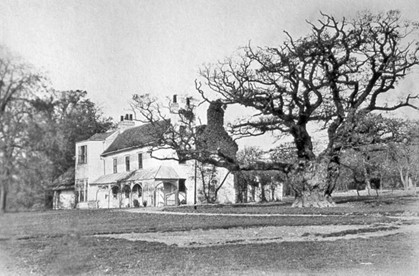
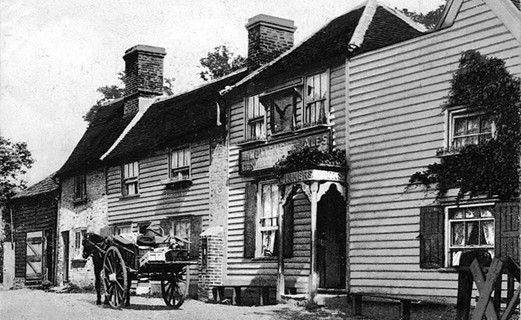
During his time at High Beach Clare did gardening on the asylum estate and was also allowed out in the forest allowing him a degree of freedom to wander its pathways and woods. He would occasionally call in at ‘The Owl Pub’ down the road, which still exists though the original that Clare knew was pulled down and rebuilt in 1975 [5]. Yet despite all of this the asylum was still a place of confinement, a place of exile away from family, friends and familiar landscapes. His sense of alienation remained. As so often, his only escape was through his poetry, one piece reflecting: ‘I loved the Forest walk …/And all the forest seemed to live with joy’ [6].
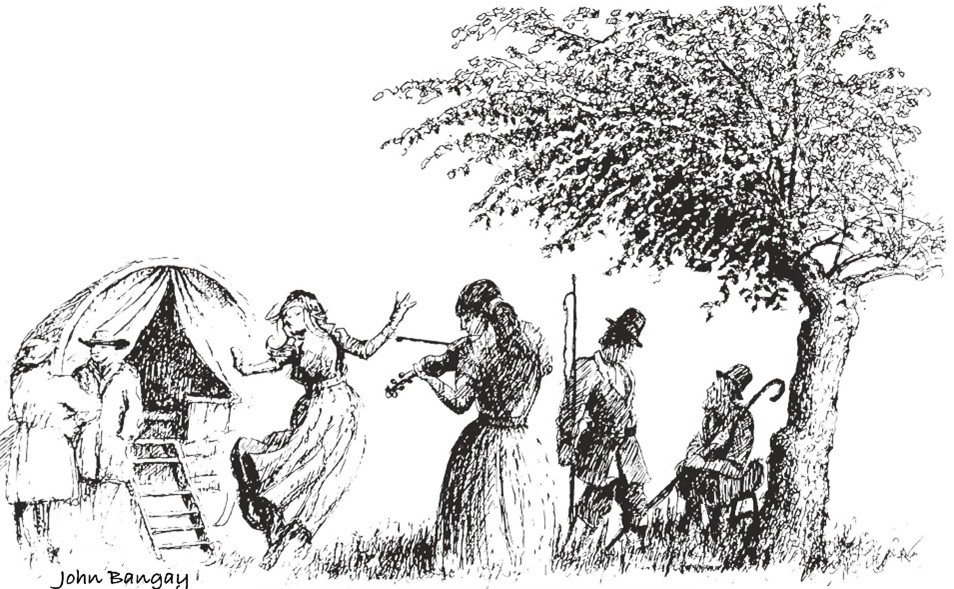
The body of poetry Clare wrote at High Beach was not amongst his most distinguished. Possibly the best known is ‘The Gypsey Camp’ which was included in the recently published Clares’ People with an illustration by the late John Bangay. Arguably the major poem of the period, began at High Beach and continued later in Northborough, was ‘Child Harold’, ostensibly an imitation of Byron. One of the many beautiful lyrics it contains is the song, ‘I’ve wandered many a weary mile’ [7] Another is the tender and generous, ‘Here’s a health unto thee bonny lassie O’ [8].
A more in-depth account of Clare’s life and work whilst a resident at the High Beach asylum was published by Peter Ralph in 2006, though it is now out-of-print. [9] A contemporary account of Clare in the asylum from May 1841 was given by Cyrus Redding [10], shortly before Clare’s ‘escape’ in July 1841 about which he wrote so movingly in his ‘Journey Out of Essex’ [11].
The asylum buildings today have several uses: a farm, a private residence and an environment centre on the site where Fairmead House once stood. Here, at The Hive (formerly The Suntrap), thousands of children from the surrounding towns and city have been introduced to another part of their world. Finally, High Beach was also a place enjoyed by other poets such as Lord Tennyson and Edward Thomas [12]. During the First World War, Thomas was stationed at the High Beach army camp. In 1916 he set up a cottage nearby for his family from which he wrote his last Christmas poem before his death at the Battle of Arras. In a poem to fellow poet Robert Frost on 16 October 1916, he talked about being ‘right alone in the forest among beech trees and fern and deer’. Close by is The Church of the Holy Innocents (see slide presentation below), surrounded by forest, which was rebuilt in 1873 replacing an earlier church in Church Road. It was there, in the churchyard, that Tennyson wrote part of his poem ‘In Memoriam’.
There is, however, another side to High Beach shared by countless thousands from London’s East End working class, many as poor as Clare’s rural communities. It was one of retreat and of escape to rather than confinement and escape from. During the century after Clare’s death, the surrounding area became known as a ‘Cockney Paradise’ [13]. The extension of the railway to forest towns such as Loughton, from 1856 to 1873 allowed many thousands of poorer families to reach the open spaces from the crowded ‘East End’. Moreover, in 1882, and following a three-year campaign, the old Royal Forest became ‘unenclosed’ returning wide areas to common and grazing land, and marked by the oak planted by Queen Victoria that looks down to towards Enfield and the start of Clare’s journey home.
In response, mass catering and entertainment facilities developed that were appropriately called ‘retreats’ e.g. Riggs Retreat, Jubilee Retreat and so on. They could seat up to 2,000 people, one of the largest being at High Beach. Organisations such as The Poor Children’s Outing Fund would bring 700-odd children and, in 1937, the Transport Workers Children’s Outings Society brought upwards to 25,000 children to Theydon, close to High Beach. During the late 1940s and 1950s, East Enders saw High Beach and the forest as a retreat from the still bomb-damaged localities. Today, the ‘retreats’ are gone, except for the small Butler’s Retreat that still serves teas to walkers and forest cyclists.
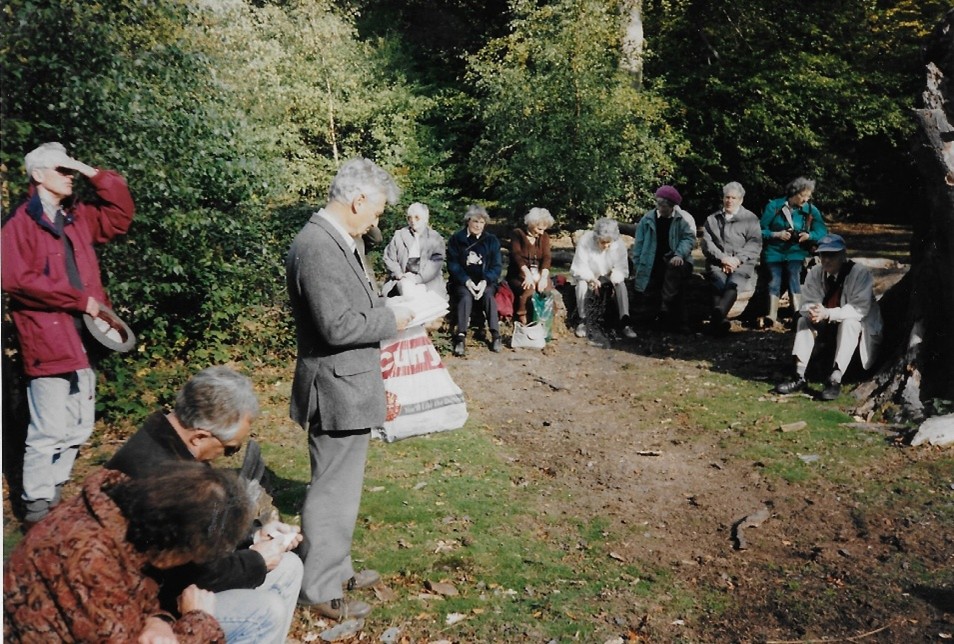
On 5 October 1996 the Society’s Hon. Vice-President Peter Cox led a group of some twenty members, including the late Mary and Peter Cox, on a tour of the High Beach sites and forest surroundings. He began with a talk in ‘The Owl’ pub, a visit to the asylum sites and then a walk through the forest interspersed with readings from Clare. A report of the visit appeared in the December 1996 Newsletter. It is hoped that another such event can be organised for 2027. Download the report of the visit in PDF format.
Mike Mecham
Notes
Abbreviations: John Clare Society Newsletter (JCSN) & John Clare Society Journal (JCSJ)
[1] Clare biographer Edward Storey (A Right To Song: The Life of John Clare, 1982) considered ‘High Beach’ to be the ‘original’ spelling, as indeed did Clare in his poetry: ‘The spelling was used in the Chapman and Andre Map of 1777 and also in regular use by local people up to the early part of this century. Several of Clare’s correspondents used it and Mr Sydney Lawrence Young – who was born in Fairmead Cottage, High Beach – confirms that this is the correct spelling”.
[2] Val Pedlar, ‘No Place Like Home’: Reconsidering Matthew Allen and His ‘Mild System’ of Treatment’, JCSJ 13 (1994), pages 42-57.
[3] Jonathan Bate (John Clare: A Biography, 2003) adopts Clare’s spelling of Leopards Hill whereas in pre-1800 maps it was name Lipped Hill.
[4] Fairmead Lodge pre-dates the nearby Queen Elizabeth’s Hunting Lodge, which was built in 1543 for King Henry VIII and renovated by order of Queen Elizabeth I, by some two centuries and was rebuilt in 1725. Source: Epping Forest Heritage Trust
[5] ‘The Owl’ pub was recorded as an alehouse in 1776. McMullen’s brewery, who had owned the building since 1898, had it pulled down and rebuilt in 1975.
[6] Eric Robinson & David Powell, The Later Poems of John Clare I (1984), page 27.
[7] ‘I’ve wandered a weary mile’, Eric Robinson & David Powell (eds.), John Clare Major Works (2008 reissue), pages 281-282.
[8] George Deacon, John Clare and the folk tradition (1983), pages 197-198.
[9] Peter Relph, Four Forest Years (2006). See also L S H Young, ‘John Clare and High Beech’, JCSN, No.7, April 1984 104
[10] Cyrus Redding, reproduced in Mark Storey (ed.), Clare: The Critical Heritage (1973), pages 247-256.
[11] John Clare, ‘Journey Out of Essex’ in Eric Robinson & David Powell (eds.), John Clare By Himself (2002), page 257-265.
[12] Peter Cox, ‘’The Hearts Hid Anguish’: Clare and Tennyson in Epping Forest’ in JCSJ, No.13, July 1994, pages 33-39; Andy Jurgis, ‘Edward Thomas at High Beech’, JCSN, 46, December 1994.
[13] Mike Mecham, ‘A Visit to High Beach’, JCSN, No.101, September 2008, page 11; Mike Mecham, ‘The Two Faces of High Beach’, JCSN, No.102, December 2008;
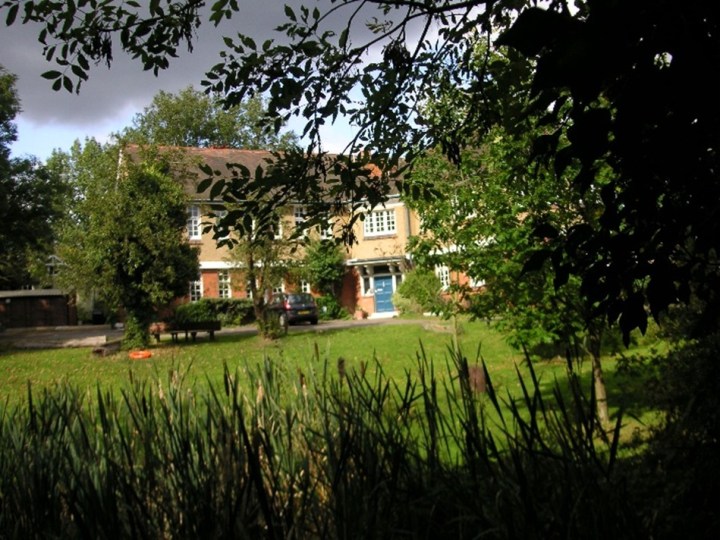
The site of Fair Mead House, High Beach.1993. Now called ‘The Hive’ Photo Mike Mecham 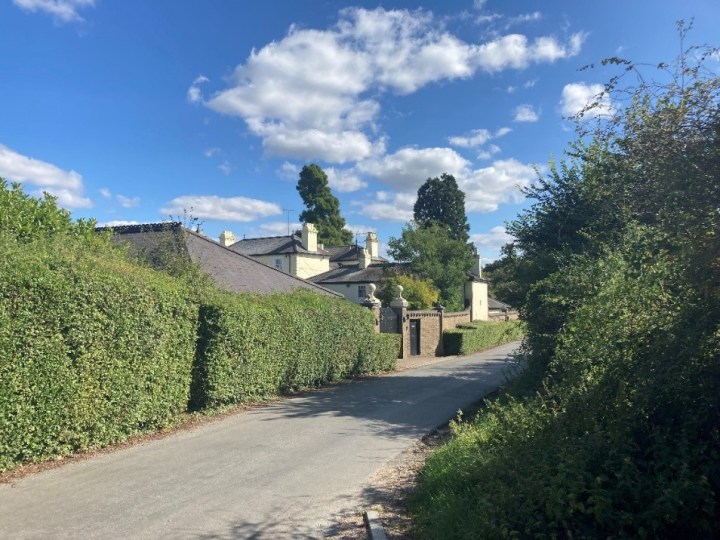
Lippitt’s Hill Lodge, High Beach, 2024. Photo Mike Mecham 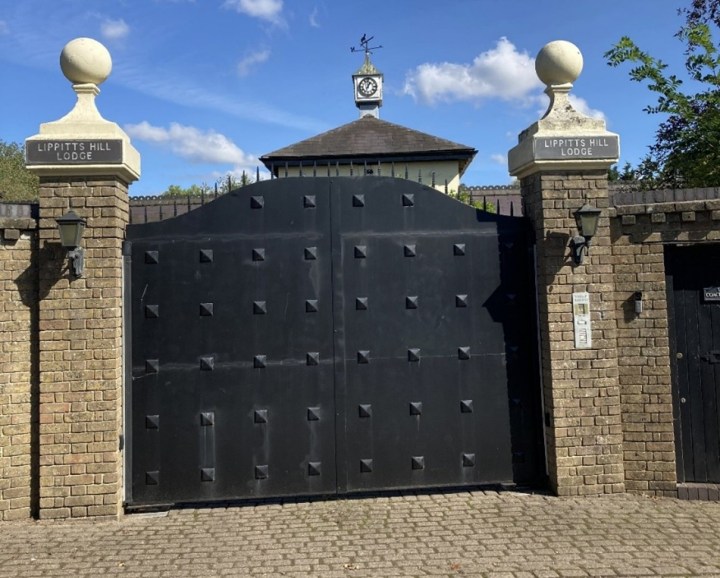
Lippitt’s Hill Lodge, High Beach, 2024. Photo Mike Mecham 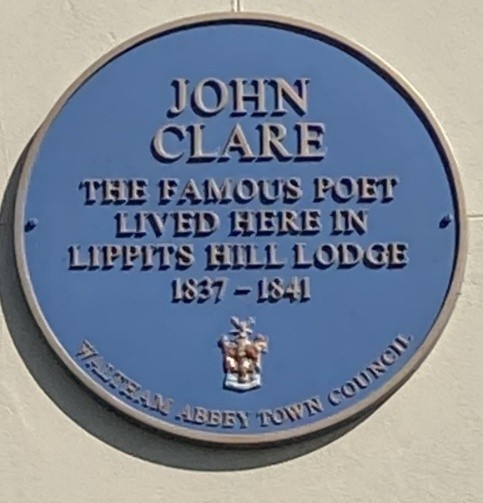
Blue Plaque at Lippitt’s Hill Lodge, High Beach, 2024. Photo Mike Mecham 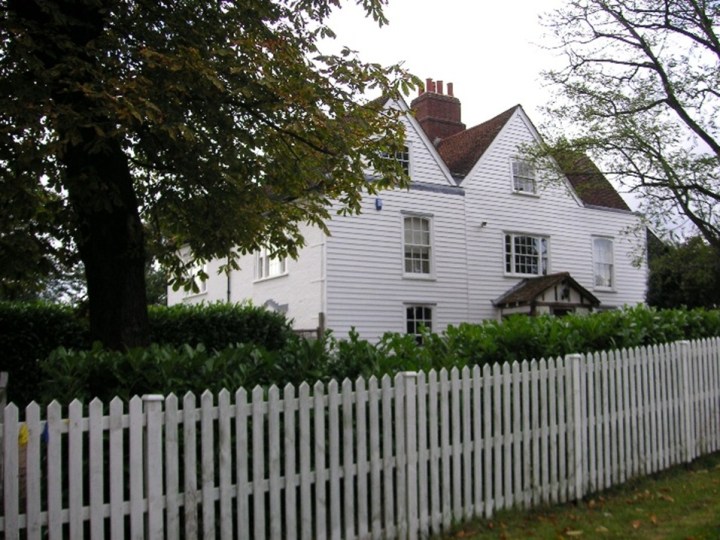
Springfield House, High Beach 1993. Photo Mike Mecham 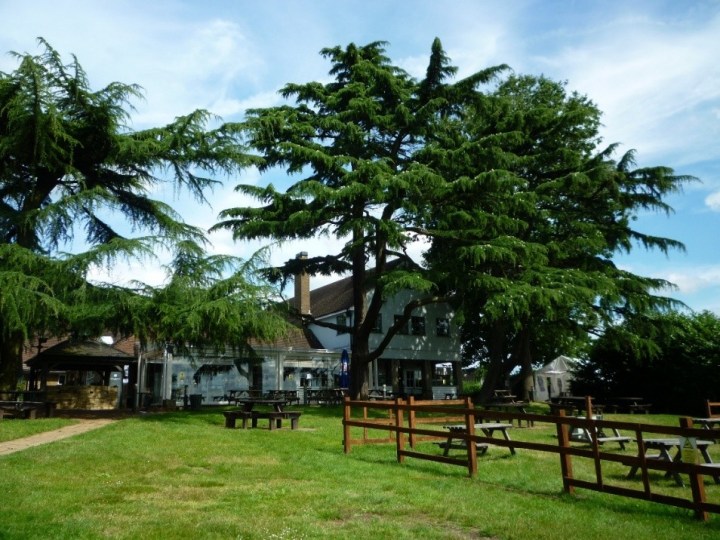
The Owl pub, High Beach, 2020. Photo Mike Mecham 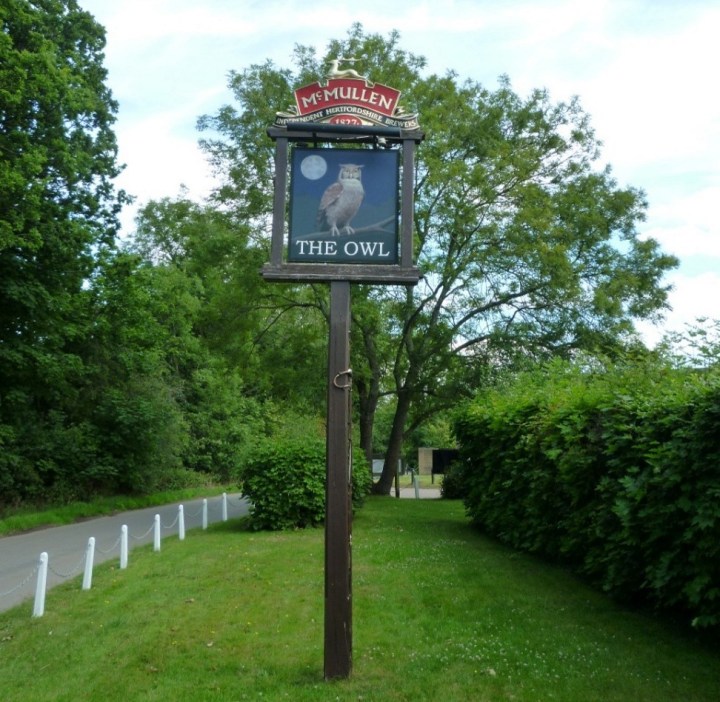
The Owl pub, High Beach, 2020. Photo Mike Mecham 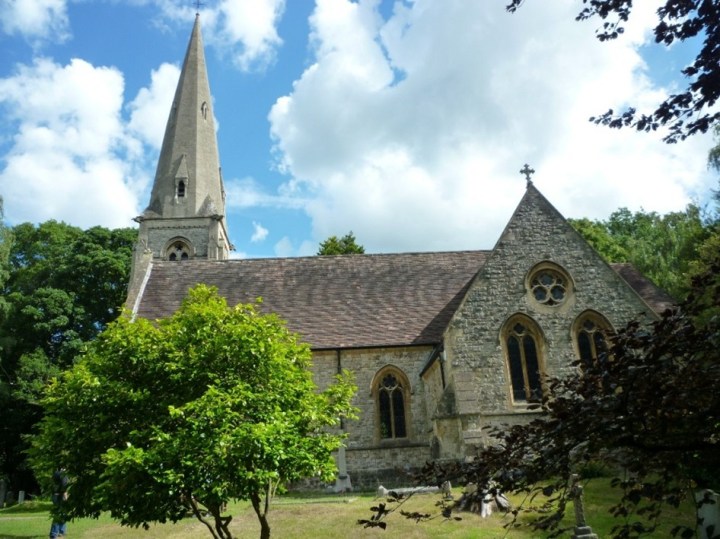
The Church of the Holy Innocent, High Beach, 2020. Photo Mike Mecham


You must be logged in to post a comment.